


THE INFLATION WAR THAT STARVED CREDIT: WHY CBN LOCKED THE VAULT TIGHTER TO FIGHT A BIGGER FIRE
By Clem Aguiyi
Tel: 08034747898
When Governor Olayemi Cardoso took over at the Central Bank of Nigeria in September 2023, he met an economy on fire. Not a small fire. A five-alarm blaze.
Inflation was 26.72% and heading to 34.19% by mid-2024, the highest in 28 years. Naira was in free fall, crashing from N700/$ to N1,600/$ in months. Ways and Means – the CBN’s printing of money for government – had ballooned to over N27 trillion. Money supply (M3) was growing at 50% year-on-year. Excess naira was everywhere, chasing few dollars and few goods. Prices doubled every year.
Cardoso had two choices: let the fire burn and watch deposits become worthless paper, or lock the vault tighter, even if it meant temporary suffocation for businesses.
He chose to lock the vault.
And he locked it with three heavy keys.
KEY 1: CASH RESERVE RATIO – 45% – The Big Lock
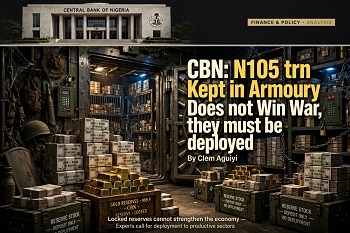
CRR is the portion of every N100 you deposit in a bank that the bank must immediately transfer to CBN and cannot touch. It sits in CBN vault yielding zero.
Before Cardoso, CRR was 32.5%. Cardoso raised it to 45% for commercial banks and 75% for public sector deposits. It is the highest CRR in the world.
Why? Because when CRR is 45%, for every N100 deposited, N45 is instantly sterilised – removed from circulation. It cannot be used to buy dollars, cannot be used to bid up prices, cannot be used to chase forex. It is dead money, deliberately.
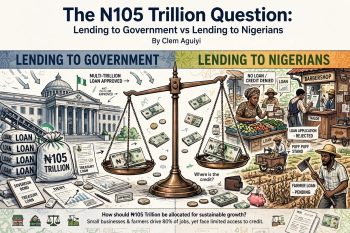
As of December 2025, total industry deposits were N110.19 trillion. With 45% CRR, it means about N49.5 trillion of depositors’ money is locked at CBN. That is almost half of all deposits frozen to fight inflation. That is why banks cannot lend despite having N105 trillion.
It was painful medicine. CBN data shows industry liquidity ratio actually rose to 60.27% by December 2025 – meaning banks had excess liquid assets because they could not lend the little that was left after CRR.
*KEY 2: MPR AT 26.5% – The Price of Money*
MPR is the rate at which CBN lends to banks. It determines all other interest rates. Cardoso raised MPR from 18.75% to 26.5% in six aggressive hikes – 850 basis points.
At MPR 26.5%, with CRR 45% and liquidity ratio requirements, a bank’s cost of funds is about 20-22%. To make profit, it must lend at 30-35%. No farmer, no manufacturer, no trader can borrow at 35% and survive.
So banks stopped lending. They used the remaining deposits after CRR to buy Treasury Bills and OMO Bills that CBN was offering at 22% risk-free. It was safer and more profitable to lend to government than to a business.
CBN also narrowed the Standing Facilities Corridor to +50/-450 basis points around MPR, meaning banks that had excess cash were punished with low returns, while banks that needed cash paid heavily. This forced banks to be disciplined.
KEY 3: MASSIVE OMO MOP-UP AND LDR CUT – The Final Seal
The third key was Open Market Operations. Cardoso’s CBN sold over N10 trillion in OMO bills to banks and foreign investors, sucking naira out of the system and offering dollars. It was a massive sterilisation.
At the same time, in April 2024, CBN cut Loan-to-Deposit Ratio from 65% to 50%. In 2019, CBN had forced banks to lend at least 65% of deposits to grow the economy. In 2024, it reversed it – telling banks to lend only 50% – because lending more would mean creating more money and fuelling inflation. It was a deliberate contractionary stance.
CBN Director, Banking Supervision, Dr. Adedeji Adetona, explained it: “Prior to 2019, there was serious slowdown in credit growth, so we raised LDR to 65%. Now we are in contractionary stance to combat inflationary pressure, so we must align LDR downward. We have only reduced, not removed, their ability to lend.”
In simple terms: When inflation is 34%, giving more loans means giving more money to people to buy more goods that don’t exist, pushing prices higher. So CBN told banks: hold back.
Did It Work?
Yes. Painfully, but yes.
Inflation fell from 34.19% to 20.12% by August 2025. Naira stabilised around N1,500/$. Money supply growth slowed. Foreign reserves grew. Investor confidence returned – which is why deposits surged to N105.01 trillion by September 2026. People now trust banks enough to keep money there, because they believe money will retain value.
The World Bank’s October 2026 report confirmed: “The CBN’s tight monetary policy stance… contributed to single-digit month-on-month inflation.”
But the cost is clear. Private sector credit growth collapsed to 9% in real terms. Non-performing loans rose to 7.51% as businesses that borrowed at high rates struggled. SMEs credit fell until recently.
Why CBN Must Now Unlock Gradually
That fire is now controlled. Inflation is down, naira is stable, reserves are up. Keeping the vault locked at 45% CRR and 23% MPR (as of September 2026) is now like keeping a patient on oxygen after he has recovered – it will suffocate him.
That is why CBN cut MPR to 23% in September 2026 and why SME credit rose to N199 billion in April 2026 from N153 billion in March.
The next step is not to throw the vault open. It is to unlock it gradually: cut CRR for banks that lend, lower MPR as inflation falls, and shift from mopping up naira to guiding naira into factories.









Leave a Reply