

Tel : 08034747898
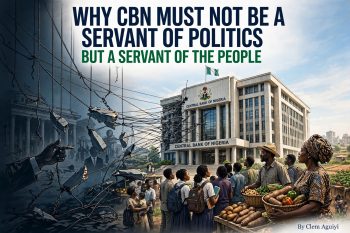
The Central Bank of Nigeria has one master to serve. It is not the President. It is not the Governor. It is not the Minister of Finance. It is not the National Assembly. It is not the rich, the connected, or the powerful.
Its master is the Nigerian people – especially the poor.
When the CBN forgets this, Nigeria suffers. When the CBN remembers this, Nigeria prospers. That is why the CBN must not be a servant of politics, but a servant of the poor.
*What Does It Mean To Serve Politics?*
To serve politics means to print money to fund elections. To serve politics means to keep interest rates low before an election, even when inflation is killing the poor. To serve politics means to give dollars cheap to friends of government while manufacturers and students suffer. To serve politics means to launch intervention programmes that are not meant to be repaid, but meant to buy loyalty.
We have seen this movie before in Nigeria, and we know how it ends.
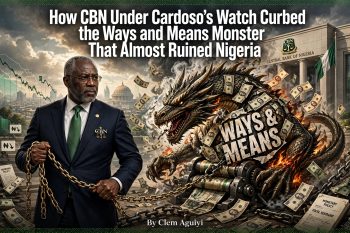
Ways and Means rose to over N30 trillion. That was not economics. That was politics. Government wanted to spend without taxing, without reforming, without discipline. So it told the CBN to print. The CBN printed. And the naira collapsed.
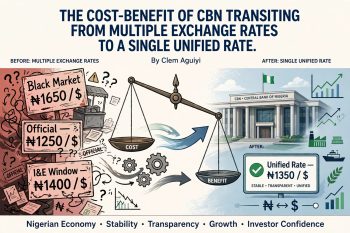
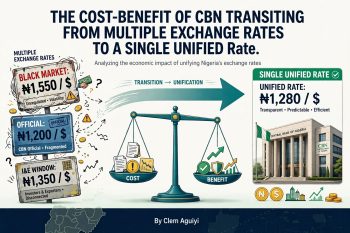
Multiple exchange rates were maintained for years. That was not economics. That was politics. A small cabal of connected Nigerians bought dollars at N460 from the CBN and sold at N750 on the street. They made billions without producing anything. Meanwhile, the real economy starved for dollars.
The naira redesign of 2023 was politics. It was rushed, unplanned, and implemented without cash. Nigerians queued at banks. Businesses died. The poor, who live on cash, suffered most. The rich used transfers and dollars. The poor had nothing.
When the CBN serves politics, the rich get richer and the poor get poorer. That is the iron law of a politicized central bank.
*Who Is The Poor?*
When we say the poor, we do not mean statistics. We mean people.
The poor is the market woman in Onitsha who sells tomatoes and watches her capital disappear because the price of transport doubles every month. The poor is the farmer in Benue who cannot get fertilizer because the naira has collapsed. The poor is the keke rider in Kano who spends his daily earnings on fuel. The poor is the graduate in Aba who cannot start a small workshop because interest rates are 35% and banks will not lend to him.
The poor is the mother in Sokoto who goes to the market with N10,000 and comes back with half a bag of what she bought last month. The poor is the pensioner in Enugu whose pension is the same, but whose food bill has tripled.
These are the people the CBN must serve. Not the politicians who want cheap money for campaigns. Not the importers who want cheap dollars for luxury goods. Not the contractors who want CBN loans they will never repay.
*How Does CBN Serve The Poor?*
*1. By Fighting Inflation*
Inflation is the cruelest tax on the poor. When inflation is high, the rich buy dollars, buy land, buy gold. They protect themselves. The poor cannot. The poor hold naira. The poor buy food daily. When food prices double, the poor do not eat half. They starve.
A CBN that serves the poor must fight inflation fiercely, even if it is unpopular. Raising interest rates is painful. But allowing inflation to run wild is more painful. Every 1% drop in inflation is food on the table of the poor.
*2. By Protecting The Value Of The Naira*
The naira is not just a currency. It is the dignity of the Nigerian worker. When the naira is stable, a worker can plan. He can save. He can send his child to school. When the naira collapses, his salary becomes paper. His savings become worthless.
A CBN that serves politics will devalue the naira to fund government. A CBN that serves the poor will defend the naira, build reserves, and ensure that the money in the pocket of the poor man keeps its value.
*3. By Making Credit Accessible*
Today, the biggest barrier to prosperity for the poor is access to credit. A small trader needs N200,000 to expand. A farmer needs N500,000 for inputs. A young tech founder needs N1 million to start. But banks will not lend to them. They lend to government, to big companies, to the connected.
The CBN must use its regulatory power to force banks to lend to MSMEs. It must support microfinance banks. It must drive financial inclusion so that a woman in a village can open an account with her phone, save safely, and borrow at a fair rate. Credit should not be a privilege of the rich. It should be a tool for the poor.
*4. By Protecting Depositors*
When a bank fails, it is not the rich who suffer most. The rich have multiple accounts, multiple assets. The poor have one account. That account is their life savings. A CBN that serves the poor must regulate banks strictly, ensure they are well capitalised, and protect depositors. The ongoing bank recapitalisation is not just for bankers. It is for the poor man whose N50,000 is in the bank.
*5. By Saying No To Reckless Spending*
This is the hardest part. A CBN that serves the poor must be able to say no to government. No, we will not print money to fund deficits. No, we will not give cheap dollars to your friends. No, we will not lower rates because elections are coming.
Saying no to government is saying yes to the poor. Because every naira printed recklessly is a naira stolen from the poor through inflation.
*The Politics of Poverty*
Let us be honest: Politicians love a weak CBN because a weak CBN gives them free money. They do not have to reform tax. They do not have to cut waste. They do not have to be disciplined. They just print.
But free money is never free. The poor pay for it. They pay through high food prices. They pay through collapsed naira. They pay through unemployment. They pay through hopelessness.
That is why any politician who wants to use the CBN as an ATM is not a friend of the poor. He is an enemy of the poor, no matter how many bags of rice he shares during elections.
True love for the poor is discipline. True love for the poor is a stable naira. True love for the poor is low inflation. True love for the poor is a CBN that is independent.
*The Future: A CBN For The People*
As we move towards 2027, we must demand a CBN that is fiercely independent and fiercely pro-poor.
We need a CBN that publishes its accounts. A CBN that explains its policies in language the market woman can understand. A CBN that goes to the markets, to the farms, to the workshops, not just to the boardrooms of Lagos.
We need a CBN that uses technology to include the excluded. That makes the eNaira work for the trader, not just for the banker. That makes instant payments cheap and reliable. That ensures that a farmer in Jigawa can receive payment in seconds, not days.
We need a CBN that supports production, not speculation. That rewards those who build factories, not those who round-trip dollars. That rewards those who farm, not those who hoard forex.
*Conclusion*
Nigeria has a choice. We can have a CBN that serves politics – that prints money for elections, that gives dollars to the connected, that punishes the poor to please the powerful. Or we can have a CBN that serves the poor – that fights inflation, defends the naira, expands credit, and protects depositors.
We have tried the first. It gave us inflation, naira collapse, and despair.
Let us now try the second. Let us insist that the CBN must not be a servant of politics, but a servant of the poor.
Because when the CBN serves the poor, the naira is stable. When the naira is stable, businesses grow. When businesses grow, jobs are created. When jobs are created, poverty falls. And when poverty falls, Nigeria rises.
The poor do not need pity. They need a stable currency. They do not need handouts. They need honest money. They do not need a CBN that serves politicians. They need a CBN that serves them.
A CBN that serves the poor is a CBN that serves Nigeria. And a Nigeria that serves its poor is a Nigeria headed for a promising and brighter 2027.




Leave a Reply