

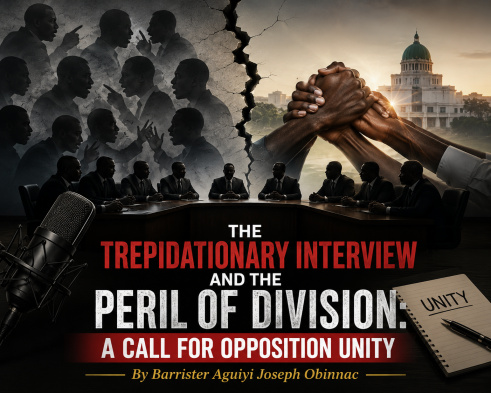
As a political watcher, Dino Melaye has long presented himself as a ball of mixed makeup. Somewhere and somehow, he never quite measures up to completeness—not in composure, not in speech, nor in character. He is not the best example in our chequered contemporary politics, and this character pattern has, regrettably, been shared by many politicians and cash-activists emanating from Kogi State (no offence intended). His recent interview, marked by trepidation and unfortunate rhetoric, once again laid bare these traits when he labelled His Excellency Peter Obi a mere local or regional champion. This came at a delicate season when the G100 of opposition parties are meeting to align and produce a single opposition candidate. People like Melaye appear determined to achieve their ends through the humiliation of the most viable candidate—whose eventual sacrifice may yet stand as the greatest offering in our political history.
The extreme tendency to manipulate, lie, betray and gaslight finds its psychological home in Machiavellianism, often paired with gaslighting behaviour. Together with related traits, these form part of the so-called Dark Triad. The companion pattern—cheating, robbing, adopting a condescending attitude toward others while feeding a paranoia of victimhood—belongs to antisocial traits married to narcissistic victimhood or the grifter mentality. In everyday language, the manipulator and gaslighter is simply called Machiavellian; the one who exploits while claiming perpetual persecution is the narcissistic grifter. These are not clinical diagnoses, but the behavioural clusters are recognisable. Melaye’s electoral flukes were possible in an earlier season because of the neophytic level of our democracy and the peculiarities of his geographical demography. That season has passed. What remains is a pattern of untoward and disgraceful labelling that serves no national purpose.
In the present moment, such conduct is especially dangerous. Opposition actors must stop attacking one another. Walking back words can produce the combined effect of the Kenneth Okonkwo and Daniel Bwala moments—public reversals that damage credibility and sow lasting distrust. The stakes are too high for personal score-settling or the projection of regional limitations onto a candidate whose appeal has demonstrably crossed regional lines.
What the opposition requires is not further fragmentation but a genuine tactical alliance—something far more substantive than the sham Mr. Wike has labelled a rainbow coalition in Rivers State. Political scientists describe the underlying logic as Duverger’s Law in reverse: instead of two large parties emerging naturally, smaller parties artificially merge to create one big challenger capable of defeating an incumbent. The phenomenon itself is known as an electoral coalition, strategic alliance, unity candidate arrangement, big-tent coalition, or, in Nigerian parlance, a merger or mega-party. Its purpose is straightforward: avoid vote-splitting and pool resources against a common opponent. It is democracy’s practical expression of the maxim that the enemy of my enemy is my friend.
History supplies clear precedents. In Nigeria in 2015, the All Progressives Congress emerged from the merger of ACN, CPC, ANPP and a faction of APGA specifically to unseat the incumbent PDP. In Kenya in 2002, the NARC coalition of fifteen parties ended KANU’s thirty-nine-year dominance. Malaysia’s Pakatan Harapan of four previously antagonistic parties defeated a sixty-one-year incumbent regime in 2018. Chile’s sixteen-party “No” coalition in 1988 helped vote out Pinochet. France’s republican front in 2002 and countless other strategic voting pacts and popular fronts demonstrate the same pattern: when polling shows an incumbent will prevail against a divided field, parties coalesce—often within months or even weeks of the contest—behind the candidate with the best chance of victory. These arrangements are lawful, protected by freedom of association, subject only to electoral deadlines, anti-coercion rules and campaign-finance requirements.
Nigeria’s opposition parties still have the opportunity to bring such an alliance to life. A serious, voluntary coalescence behind a single, viable presidential candidate would surprise and upstage the corrupt and tyrannical power structures currently entrenched at the centre. It would demonstrate that the opposition is more interested in rescuing Nigeria than in settling personal scores or preserving individual platforms. Dino Melaye and those of similar disposition would do well to recognise that the time for regional put-downs and mutual humiliation has passed. The country needs disciplined strategy, not further theatre. The sacrifice required will be real; the reward, if the alliance holds, could be historic.









Leave a Reply