

Email: Totalpolitics@ymail.com
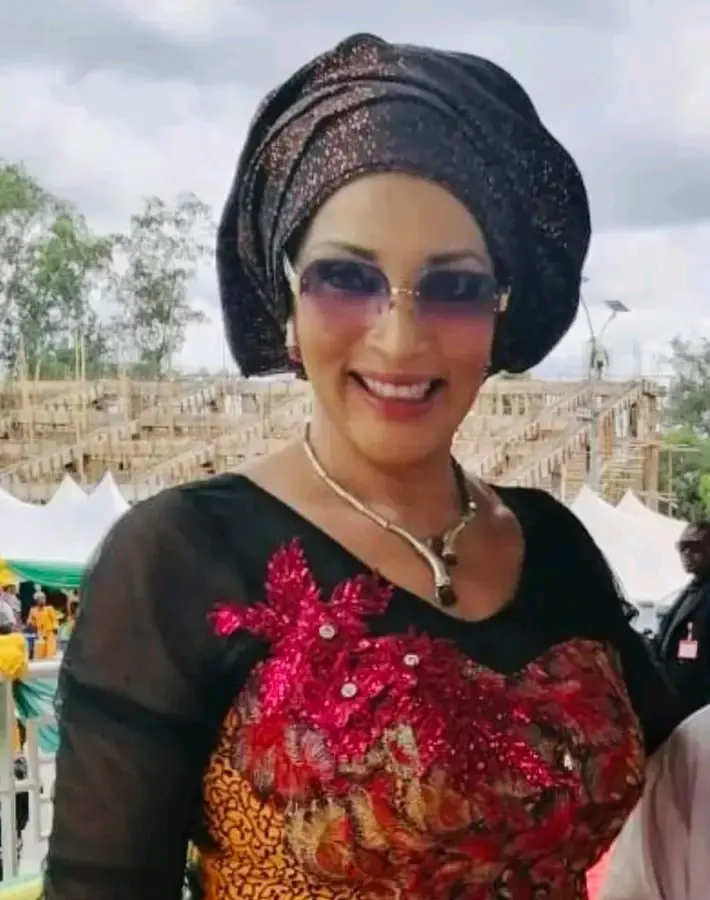
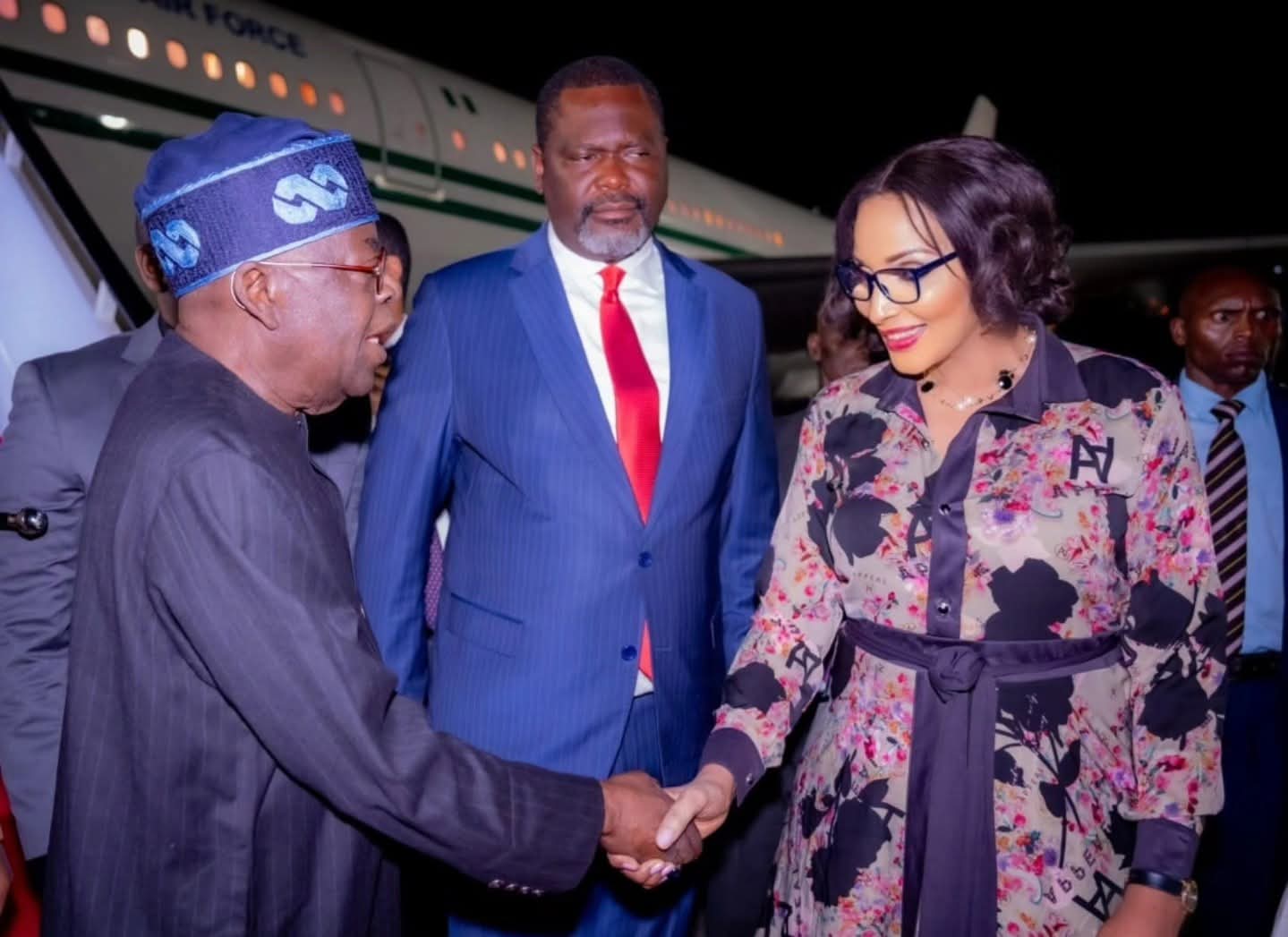
President Bola Ahmed Tinubu’s elevation of Nigeri’s foremost national icon, Madam Bianca Odumegwu-Ojukwu to substantive Foreing Affairs Minister on April 29th 2026, after Ambassador Yusuf Tuggar stepped down to contest elections, is the closest Nigeria has come to appointing its own Henry Kissinger: a figure whose personal brand, intellectual reach and instinct for power politics could redraw the country’s place in a disorderly world. The comparison is deliberate. Kissinger did not merely manage American diplomacy; he authored a theory of it. Odumegwu-Ojukwu inherits a ministry at a similar inflection point, with the raw materials to do the same for Nigeria, if she chooses to. The résumé already reads like a diplomat’s bildungsroman. Born in Ngwo, Enugu State in 1968, she won Most Beautiful Girl in Nigeria in 1989, and later Miss Intercontinental, then parlayed pageantry into a law degree from the University of Nigeria and a master’s in International Relations and Diplomacy from Alfonso X el Sabio University in Spain. She served as ambassador to Ghana in 2012 and then to Spain, chaired ECOWAS foreign ministers’ meetings, and ran the diaspora brief before her spell as Minister of State Foreign Affairs from October 2024. She is fluent in the language of summits and the memory of her late husband’s name still commands a hearing in every corner of the federation. That combination, legitimacy at home, fluency abroad, is what made Kissinger consequential beyond his portfolio. Bianca Odumegwu-Ojukwu arrives with it, and with a brief that cannot wait.
The inheritance is defined by three pressures. First, Tuggar’s 2026 doctrine of strategic autonomy, regional stability and responsible global partnership. Second, Tinubu’s instruction to advance economic diplomacy, foster regional stability and protect Nigerians everywhere. Third, the numbers. Trade with ECOWAS rose 43% year-on-year to N6.9trn in the first nine months of 2025, with crude, gas oil and floating vessels making up three-quarters of exports to the bloc. Yet Mali, Burkina Faso and Niger have left ECOWAS, formed the Alliance of Sahel States and imposed a 0.5% tariff on its imports, jeopardising N234bn of Nigerian exports. The Sahel is exporting risk faster than West Africa can export goods. The riskiest part is acting as if nothing is at stake. There is a need to foster re-engagement with the AS states, not to outsmart them, but to convince them that our interest is also their interest. In doing this, the clear objective will be to foster stability and equilibrium and not necessarily unification. Beyond the region, 2026 is being priced as the “Year of Oil, Hydrocarbons, and Gas” as US-Iran tensions fracture energy markets and expose the brittleness of global refining. Nigeria has created an Office of the Special Presidential Envoy on Climate because climate is now foreign policy. And demography is destiny: 70% of Nigerians are under 25. Foreign policy that ignores them is fiction.
If you dont know where you are going, every road gets you no where and this is where the Kissinger parallel sharpens. A former AU commissioner put it bluntly: “Kissinger had shuttle diplomacy. Bianca has 20m Nigerians abroad. That’s leverage you can bank.” Kissinger’s method was to link structure to strategy: détente with Moscow, opening to Beijing, realpolitik in the Middle East. Bianca Ojukwu’s structure is the diaspora. She has a mandate to ensure all Nigeria’s abroad are protected, especially with the rising xenophobic tensions against Nigerians in Ghana , South Africa and other places. Nigerians abroad sent home $20.93bn in 2024, over four times foreign direct investment, a figure President Tinubu himself highlighted. The Central Bank recorded $4.22bn through formal channels in January to October 2024 alone, up 61% year-on-year. The United States accounts for $7.5bn to $8.5bn annually. These 20m citizens are Nigeria’s most reliable source of hard currency, its de facto sovereign wealth fund, and its largest lobby abroad. No Nigerian foreign minister has weaponised that fact. She can. The doctrine writes itself: convert remittance flows into diaspora bonds for deep-sea ports and gas flare commercialisation; build consular protection units in America, Britain and South Africa; negotiate a skills passport with the International Organisation for Migration to turn brain drain into brain circulation. Kissinger used backchannels. Odumegwu-Ojukwu has a human channel.
Strategic autonomy, Tuggar’s first pillar, will test her most. Nigeria cannot be a proxy, nor can it be absent. That means intelligence-sharing with Washington, gas deals with Europe that do not preclude BRICS capital, and telling Beijing that port concessions require competitive tenders. It means reviving ECOWAS without humiliating the Association of Sahel States, because a 0.5% tariff today becomes a border closure tomorrow, and N234bn of exports become bankruptcies. She has already chaired ECOWAS meetings. The next move is a quiet circuit to Bamako, Ouagadougou and Niamey. Kissinger’s Middle East shuttles worked because he understood that peace is transactional. So is West African trade. A Lagos-based economist was unsparing about the stakes: “Remittances are 4x FDI. Ignore that, and you’re not doing foreign policy. You’re doing theatre.”
Economic diplomacy is the second pillar, and here the data give her room. Nigeria exported 662,993 metric tonnes of goods within ECOWAS in the first half of 2025. Total exports to Africa were N3.41trn in Q4 2025, against N696bn in imports. Yet Nigeria still imports $1.2bn of fish annually despite a coastline that should make that absurd. The blue economy, maritime security in the Gulf of Guinea, and bankable blue-finance projects are all on the table as Nigeria pitches itself from Mombasa to Lisbon. Europe took 36.24% of Nigeria’s exports in Q4 2025, worth N6.87trn. Her years in Madrid are not ceremonial; they are a Rolodex. Use it to lock in gas as a transition fuel, negotiate migration compacts that benefit Nigeria, and anchor investment in port decongestion and agro-processing. An Abuja-based risk analyst captured the shift in tone around her appointment: “She’s not here to attend conferences. No foreign policy, no matter how ingenious, has any chance of success if it is born in the in the minds of a few and carried in the hearts of none. She’s here to re-price Nigeria.”
The third pillar is people. Citizen diplomacy cannot be an afterthought when 20m Nigerians live the country’s foreign policy daily. That means digital consular services, rapid-response evacuation protocols, and diaspora voting frameworks that give political weight to economic weight. It means aligning climate diplomacy with the demography of a nation where the median age is 18. The Office of the Special Presidential Envoy on Climate gives her a seat; her job is to turn it into leverage for adaptation finance, gas monetisation and green industrial corridors.
Kissinger’s critics called him amoral. His defenders called him effective. Bianca Odumegwu-Ojukwu does not need to choose. Nigeria’s national interest is moral enough: jobs, security, dignity. The symbolism of her surname will be noted in the South-East and scrutinised in the North. A BOT member of APGA, the party her late husband founded, she understands the weight of history without being captive to it. Symbols do not negotiate tariffs. Statecraft does. She has the training, the networks and the moment. Nigeria has the remittances, the market and the youth. What it has lacked is a foreign minister who sees the ministry as a chancellery, not a post office.
The world is re-ordering around energy, data and demography. It is re-arming, re-shoring and re-aligning. In that world, middle powers do not get participation trophies. They get a doctrine or they get ignored. Kissinger understood that for America in 1973. If Bianca Odumegwu-Ojukwu understands it for Nigeria in 2026, this appointment will not be remembered as a nod to inclusion. It will be remembered as the moment Nigeria stopped reacting to the world and started shaping it. The Bianca Ojukwu Doctrine, if she writes it, begins now
BIANCA ODUMEGWU OJUKWU: Nigeria’s Kissinger Moment. By Clem Aguiyi ESQ




Leave a Reply