

Tel : 0803 474 7898
In February 2026, renowned economist Professor Jeffrey Sachs delivered a sobering yet galvanising address to African leaders: “Unite or Fall! Time Is Running Out!” Sachs warned that Africa’s 55 fragmented economies cannot survive in a competitive global order. With a youthful population of 1.5 billion, the continent must transform into a single, integrated economic bloc through the African Continental Free Trade Area (AfCFTA), coordinated infrastructure, and bold investment. He prescribed 8–10 percent annual GDP growth over the coming decades, achieved by allocating 40 percent of GDP to human capital, infrastructure, and technology—explicitly modelling after China’s rapid, state-led industrialisation. Fragmentation suffocates progress; unity, digital connectivity, a continental power pool, and sovereign financing are non-negotiable. Sachs’ message is clear: business as usual will condemn Africa to perpetual poverty; decisive, collective modernisation is the only path to global dominance.
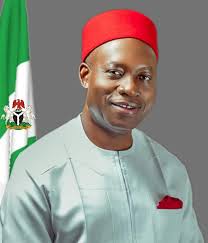
For a sub-national “micro city-state” like Anambra, the speech is not abstract Pan-African rhetoric—it is a blueprint for immediate domestic policy. While we await continental unity, Anambra must build the human capital, innovation ecosystems, and energy foundations that will allow seamless integration when the AfCFTA and African Union power pool materialise. Governor Prof. Chukwuma Soludo’s 2026 budget already positions the state as a trailblazer, allocating 46.9 percent (N359 billion) of the N757 billion total to education—the highest in the South-East and far exceeding UNESCO’s 15–20 percent benchmark. The challenge now is to translate Sachs’ vision into enforceable state policy and local-government execution so that every child benefits, every local government gains an innovation district, and the entire state achieves full electrification within a decade.
First, safeguarding and weaponising the education budget. Proper application demands transparency and results-based governance. The state should consider establishing an independent Education Quality Assurance Commission, reporting directly to the Governor, with real-time digital dashboards tracking every naira spent. At least 20 percent of the education vote must ring-fence digital infrastructure and AI integration: procurement of solar-powered tablets and laptops for every public primary and secondary pupil, statewide broadband in all 1,000+ public schools, and mandatory AI literacy in the curriculum from Primary 4. Teacher retraining must shift from rote pedagogy to coding, data analytics, and robotics. Public-private partnerships with global AI firms (Microsoft, Google, and Chinese tech giants) can co-create localised content in Igbo and English. Annual audits tied to learning outcomes—measured by standardised digital assessments—will replace input-based spending. This ensures Anambra’s children emerge not as consumers of technology but as creators, ready for the knowledge economy Sachs envisions. Revisiting the era of education supervisors and education secretary becomes valuable
Second, institutionalising Solution Innovation Districts in every local government. Sachs stressed that technology and industrial clusters drive rapid catch-up growth. Anambra already boasts commercial ingenuity; we must scale it. A new state law—the Anambra Innovation District Act—should mandate one district per local government area by 2028. Each 50-hectare zone will feature shared infrastructure: reliable power, high-speed fibre, co-working spaces, fab-labs, and incubation hubs focused on AI-driven manufacturing, agro-processing, renewable energy, and fintech. Seed capital will come from 5 percent of the education and infrastructure votes, matched by private investors via tax holidays. Local governments will chair district boards, ensuring grassroots ownership. Youth entrepreneurs from Nnewi, Onitsha, and rural Awka will gain mentorship and venture funding. Within five years, these 21 districts can generate 50,000 new jobs and prototype products for AfCFTA export—precisely the industrial base Sachs urges.
Third, electrifying the entire state. Sachs repeatedly highlighted a unified African power pool as foundational. Anambra cannot wait. The state must launch “Operation 100 Percent Power by 2035”—a comprehensive electrification master plan. Phase one (2026–2028): deploy 500 MW of solar mini-grids and rooftop systems across the 21 local governments, prioritising schools and innovation districts. Phase two: build inter-LGA transmission lines and smart-grid technology for load balancing. Phase three: interconnect with the national grid and, when ready, the West African Power Pool. Chinese engineering firms, following the model Sachs praises, should be invited through competitive bidding for turnkey projects. This is not charity; it is strategic partnership with technology transfer clauses.
Funding these ambitious programmes within constrained budgets is feasible if we reject the defeatist narrative of “limited resources.” Anambra’s internally generated revenue (IGR) already exceeds many states because of its entrepreneurial DNA. Policy must raise IGR from the current base to N250 billion annually by 2030 through automated tax systems, property valuation, and market levies without increasing rates. Development bonds—green energy and innovation bonds—listed on the Nigerian Stock Exchange will tap domestic capital. Public-private partnerships (PPPs) with Chinese, Indian, and European firms will finance 60 percent of infrastructure under long-term, low-interest Build-Operate-Transfer agreements, exactly as Sachs recommends for sovereign financing. The African Export-Import Bank (Afreximbank) and AfDB windows opened by AfCFTA can provide concessional loans once Anambra demonstrates policy seriousness. Diaspora remittances, already substantial, can be channelled via a new Anambra Sovereign Wealth Fund offering tax incentives. Federal matching grants for education and power projects should be aggressively pursued. Critically, zero tolerance for leakages through blockchain-tracked procurement will ensure every kobo delivers value.
Implementation at the local level is the ultimate test. The state may devolve between 15-30 percent of relevant capital votes directly to local governments with clear key performance indicators. Monthly town-hall accountability forums, live-streamed, will empower communities to track and monitor projects. Traditional rulers, market associations, and youth groups must sit on district oversight committees. This bottom-up execution aligns perfectly with Sachs’ call for coordinated yet decentralised action.
Professor Sachs’ warning is urgent: unite or fall. Anambra has chosen to act first. By ring-fencing the historic education budget for digital and AI excellence, establishing innovation districts in every local government, electrifying the state through pragmatic partnerships, and funding these via innovative domestic and continental instruments, we are not merely responding to a speech—we are building the micro-foundation of Africa’s future. Our children will inherit not poverty but prosperity; not fragmentation but integration-ready excellence. Time, indeed, is running out—but Anambra is already running ahead.
Anambra State: Localising Professor Jeffrey Sachs’ “Unite or Fall!” – From Continental Vision to State and Grassroots Policy Action. By Dr. Clem Aguiyi ESQ







Leave a Reply