

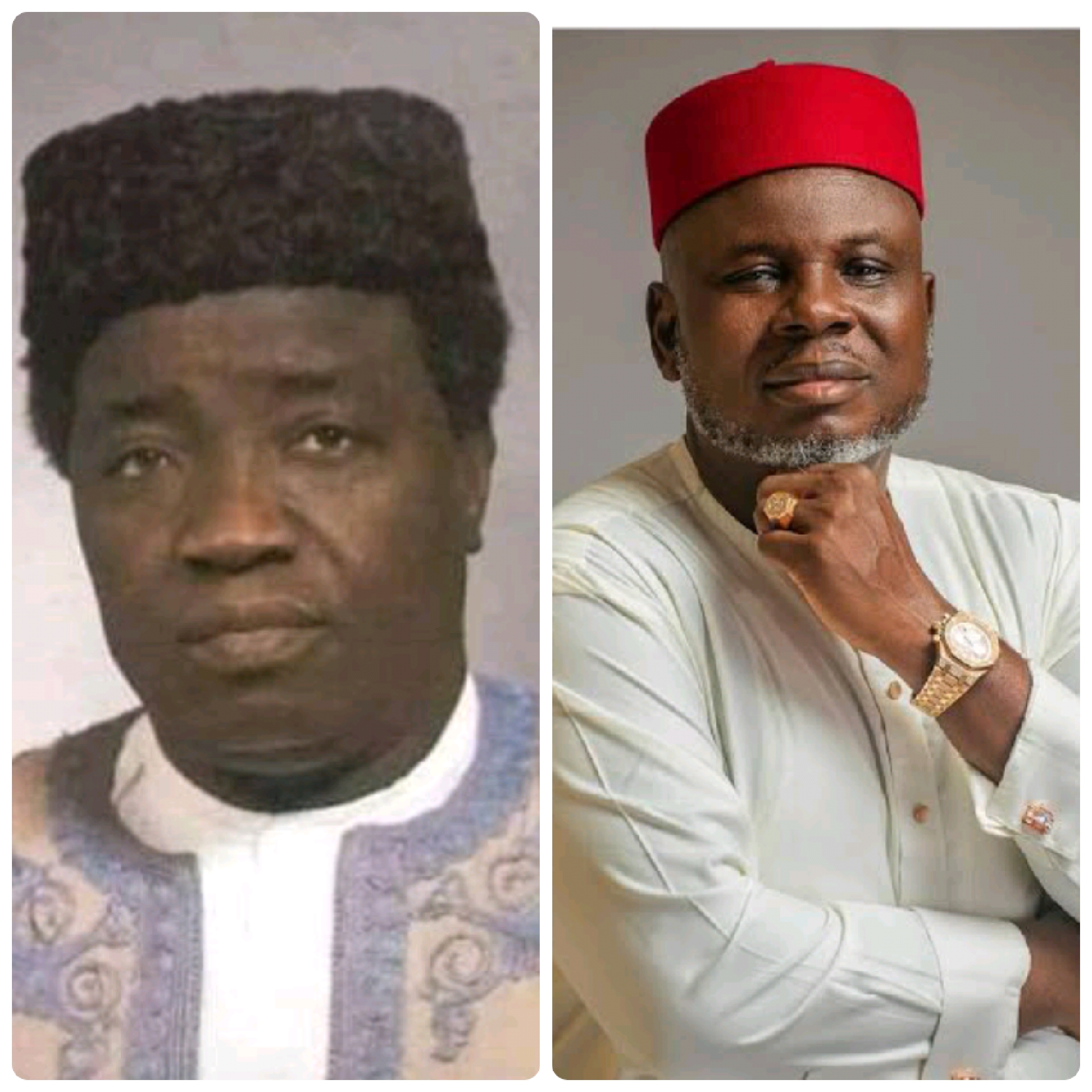
Tel: 08034747898 Let me begin this episode by reintroducing Alhaji Sabo Bakin Zuwo to readers who may not know about the man and what made him famous and, at the same time, infamous. Bakin Zuwo was a Nigerian politician. He served as a senator and, in 1983, was elected as the Governor of Kano State, Nigeria. He was infamous for his verbal blunders and notable gaffes:- Equating Soft Drinks with Mineral Resources: When questioned about Kano State’s lack of mineral resources, Zuwo replied, “Who told you so? There’s Brahma Gurana, there’s Danta Cola, there is Coke, there is Fanta.” He essentially equated soft drinks with mineral resources, sparking widespread ridicule. - Misunderstanding the Term “Running Mate”: When asked about his running mate during the 1983 governorship election, Zuwo responded, “W’Allahi t’Allahi, it is Abubakar Rimi that is running after me. He won’t leave me alone.” Abubakar Rimi was actually his opponent from the Nigerian People’s Party (NPP). - N3.4 Million Discovery: After his administration was toppled by the military junta headed by then Major General Buhari on December 31, 1983, N3.4 million was discovered in his lodge. Zuwo’s response was, “Government money in government house – so what the heck!” This led the media to dub him “Banking Zuwo”. These gaffes have become legendary in Nigerian politics, symbolizing verbal missteps and poor communication. Zuwo’s legacy serves as a cautionary tale for politicians to be mindful of their words and actions. However, history, it is often said, repeats itself—first as tragedy, then as farce. In Nigeria’s Second Republic, one name stood out for comic notoriety: Alhaji Sabo Bakin Zuwo, the People’s Redemption Party (PRP) governor of Kano State between October and December 1983. His verbal blunder, though humorous, exposed a deeper flaw in leadership—when unpreparedness, overconfidence, and ignorance combine in one political personality. Sadly, that ghost has returned to Nigeria’s political theatre, now wearing the face of Prince Nicholas Ukachukwu, the APC gubernatorial candidate in Anambra State. Ukachukwu’s recent appearance on national television evoked memories of Bakin Zuwo’s comic misstep. When questioned about the menace of “baby factories” in Anambra—a term denoting criminal human trafficking—he confidently declared, “Nobody has more factories in Anambra than me and my family.” The confusion was instant, the laughter was global, and the damage was self-inflicted. That remark, like Bakin Zuwo’s Fanta-and-Coca-Cola gaffe, reflected not just verbal carelessness but a troubling lack of comprehension about governance and public sensitivity. In one of his campaign stops he told the people that the economy of Anambra State has fallen like the breast of the female gender and that he will import braziers from China for the women to make their breast firmer. The audience, particularly the women, were not amused. The resemblance between both men is chilling. Like Bakin Zuwo, Ukachukwu parades a loud, boastful confidence that masks an alarming intellectual emptiness. Both men exhibit a fatal blend of arrogance and ignorance—a readiness to speak on every issue without thinking through the meaning or consequence. They view public engagement as theatre, not as a serious civic duty. Their communication reflects not enlightenment but entitlement. Ukachukwu’s problem, however, runs deeper. His public persona radiates an unrestrained pride that treats every platform as an avenue for self-advertisement rather than public persuasion. He brags where he should reflect, boasts where he should explain, and attacks where he should clarify. His political style is more performance than policy—a blustering confidence unmoored from substance. That is not leadership; it is showmanship driven by ego. Like Bakin Zuwo, Ukachukwu mistakes wealth for wisdom. He approaches governance as an extension of his business empire—authoritarian, self-referential, and intolerant of dissent. He seems allergic to introspection, convinced that money and noise can substitute for understanding and empathy. That mindset is not only dangerous; it is undemocratic. Leaders who cannot process criticism or admit mistakes often become tyrants once given unchecked power. Anambra cannot afford such recklessness. A state with some of Nigeria’s brightest minds deserves more than a politician who confuses metaphors, trivializes crises, and glorifies ignorance. The “baby factory” gaffe was not just a slip of the tongue—it was a window into how Ukachukwu thinks: impulsively, superficially, and self-servingly. It reveals a man more suited to the noise of markets than the discipline of governance. The anchor was too embarrassed by his rhetoric that she had to hurriedly cut off the show. Alhaji Sabo Bakin Zuwo’s blunder is remembered today as a harmless relic of Nigeria’s political infancy. Ukachukwu’s, however, stands as a warning in an era where information is instant and accountability is digital. His repeated display of arrogance and unpreparedness makes him not merely a poor communicator but an unwanted aspirant to power. The reincarnation of Bakin Zuwo in Prince Nicholas Ukachukwu is no longer a matter of satire—it is a civic concern. If Anambra entrusts its destiny to a man who confuses words, belittles intellect, and boasts without restraint, the consequence will not be comedy—it will be catastrophe that will not serve any good to the future growth, development and prosperity of Anambra – the Light of the Nation. God bless Anambra! God bless the people!!
The Reincarnation of Sabo Bakin Zuwo in Anambra Politics: Prince Nicholas Ukachukwu as a Case Study By Clem Aguiyi


Leave a Reply