

Phone: 081-71481428
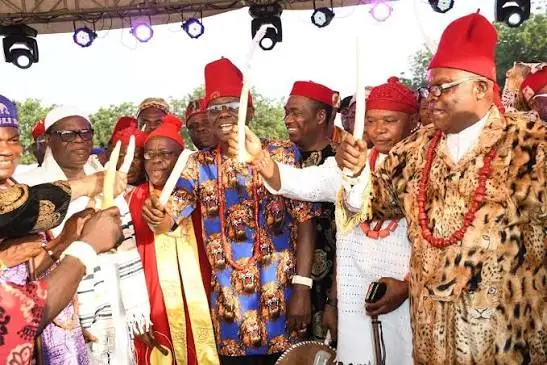
On September 29th each year, Ndi Igbo across Nigeria and in the Diaspora pause to celebrate themselves and to reflect on their collective journey as a people. Yet, in truth, this annual celebration is less of a festival and more of a rehearsal—a ritual of re-hardening our grievances, of revisiting the old wounds of a civil war that ended not with victory or defeat, but with a stalemate. It was a truce wrapped in “No victor, no vanquished,” yet, deep down, every Igbo man and woman knows that the war did not end in our favor. We did not achieve Biafra. We entered a negotiation that gave us only survival, not sovereignty, and since then, the Igbo have lived as survivors in a union that continues to treat them with suspicion and calculated marginalization.
The Burden of Suspicion
More than five decades after the guns went silent, Ndi Igbo still carry the weight of suspicion in the Nigerian federation. From politics to governance, from security architecture to resource allocation, Igbo sons and daughters are often viewed as potential threats rather than stakeholders. This suspicion is not always born of hatred, but of fear. Fear of our ingenuity. Fear of our resilience. Fear of our entrepreneurial daring and our egalitarian upbringing which pushes every Igbo child to strive, to succeed, to rise above mediocrity.
But this fear comes with consequences. It translates into exclusion from key political positions, it manifests in structural neglect of the South-East, and it ensures that no matter how loyal or patriotic an Igbo person may be, they are still approached with caution in the corridors of power. Nigeria’s other federating units, or what we fondly call “tribes,” do not easily trust Ndi Igbo. This lack of trust has become both our political albatross and our national reality.
The Double-Edged Sword of Entrepreneurship
One cannot speak of Ndi Igbo without highlighting our cultural and commercial spirit. Wherever we find ourselves—be it Lagos, Kano, Jos, Port Harcourt, or in faraway London, Johannesburg, Guangzhou, or New York—we seize opportunities and dominate commercial sectors. This is not an accident; it is the fruit of centuries of egalitarian culture that refuses to let poverty become destiny. Yet, our success in commerce is both our strength and our weakness.
Host communities often view Ndi Igbo not as partners in progress but as competitors. Resentment festers. Envy grows. And when crises erupt, it is often our shops that burn first, our businesses that are looted, and our families that flee. Economic success has given us leverage, but it has also brought us political headwinds. Many still see Ndi Igbo as merchants without political muscle, men and women chasing profit while others consolidate power.
But we cannot help ourselves. Commerce is in our blood. What we must now do is transform this commercial strength into political and strategic advantage.
The Big Question: What Next for Ndi Igbo?
The critical question before us is not whether we are discriminated against. That reality is obvious. The real question is: how do we rise above it? How do we transform our grievances into strategy, our suspicion into strength, and our entrepreneurial spirit into political dominance?
We must study the Jews. After centuries of persecution, after the horrors of the Holocaust, they built Israel not only as a homeland but as a strategic center of global influence. Today, Jews around the world are a powerful lobby group, shaping policies in Washington, London, Brussels, and beyond. They leveraged commerce, education, unity, and a deep sense of identity to survive and thrive. Ndi Igbo can do the same.
We have the minds. We have the will. We have the resilience. What we lack is leadership and strategic organization.
SWOT Analysis of Ndi Igbo
If we are to reposition ourselves, then a SWOT analysis is necessary:
Strengths: Entrepreneurial drive, resilience, egalitarian upbringing, global presence, strong cultural identity.
Weaknesses: Disunity, lack of centralized leadership, over-dependence on Nigeria’s government, vulnerability in host communities.
Opportunities: Global networks, expanding diasporic influence, ability to form economic blocs, untapped regional resources, youth energy.
Threats: Continued political marginalization, ethnic suspicion, security crises, brain drain, cultural erosion in the diaspora.
This analysis reveals that our future lies in leveraging our strengths and opportunities while addressing our weaknesses and threats.
Towards a Re-Imagined Igbo Future
The time has come to gather our people, not merely for annual celebrations, but for a serious re-imagination of our future. We must think beyond lamentations and grievances. We must deliberately announce our presence in Nigeria and beyond. The Jewish people remind us that survival is not enough; survival must be translated into influence, power, and development.
To this end, Ndi Igbo must evolve into a formidable world lobby group. We must establish strong cultural and commercial institutions that speak for us globally. We must make friends with other groups, businesses, and governments around the world. We must use commerce as leverage to erect the pillars of our political and cultural renaissance.
Imagine the possibilities:
A one-week commercial strike across Nigeria to demand a seaport in the East.
A coordinated levy among Ndi Igbo worldwide to build super highways, hospitals, schools, and research centers in Ala-Igbo.
A Marshall Plan designed by us, funded by us, and executed by us, without waiting for the corrupt and unrepentant Nigerian state to fulfill promises it has never intended to keep.
We must sacrifice once more, not in blood, but in resources, vision, and unity.
The Leadership Question
At the heart of our plight is the crisis of leadership. Ndi Igbo have never lacked brilliant individuals, but we have often lacked collective leaders who can unite us beyond party lines, beyond state boundaries, beyond egos. Our disarray has scattered us, leaving many of our people lost, imprisoned, or forgotten in the far corners of the world.
We must demand new leadership—visionary, sacrificial, strategic leadership. Leadership that can organize our wealth and talents into a coherent force. Leadership that understands diplomacy as much as commerce, politics as much as culture, faith as much as reason.
A Call to Action
We must stop waiting for Nigeria to validate us. We must stop waiting for handouts from Abuja. We must stop complaining and start building. With God who strengthens us, we can unleash our full potentials as a people.
The future of Ndi Igbo lies not in the grudges of the past but in the vision of tomorrow. Yes, we remember the war. Yes, we remember the betrayals. But survival is not enough. We must thrive. We must build. We must dominate.
Our children deserve an Ala-Igbo that is a hub of commerce, culture, technology, and education. Our diaspora deserves a homeland they can be proud to return to. Our destiny demands that we transform suspicion into strength, envy into respect, and marginalization into influence.
It is time to re-imagine ourselves. It is time to re-launch Ndi Igbo. It is time to rise again.
The Plight of Ndi Igbo in a Changing World: Re-Imagining Our Future – By Barrister Joseph Obinna Aguiyi



Leave a Reply