

WhatsApp:08171481428
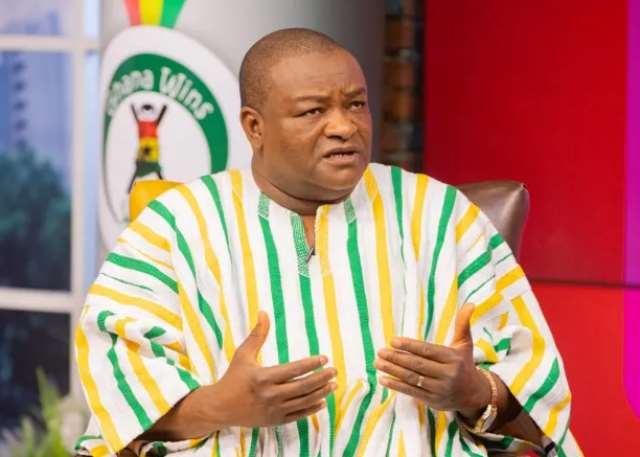
Across West Africa, the dream of regional integration and peaceful coexistence is being tested by the reckless utterances of a man who should know better. Dr. Hassan Ayeriga, a former presidential candidate of Ghana’s ruling All Progressives Congress (APC), has chosen to resuscitate his failed political relevance by inciting hate and xenophobia against Nigerians—particularly the Igbo people. His inflammatory threats, which include a self-imposed deadline for Nigerians to leave Ghana or face violence, looting, and vandalism, are both disgraceful and dangerous. They reveal a man driven not by patriotism but by the politics of desperation and hate.
Ironically, Dr. Ayeriga himself was nurtured in Nigeria—educated in Zaria under a system that never discriminated against him as a foreigner. Nigeria offered him what many of its citizens enjoyed: free, quality education and a welcoming environment. It is therefore perplexing that a man who once benefited from Nigerian generosity now seeks to repay it with bile, prejudice, and a call to lawlessness. One must ask: what exactly is his grouse? What inner demons push a man to publicly threaten a community that once embraced him?
If Dr. Ayeriga’s problem is that some Nigerians, particularly Igbo businessmen, have allegedly committed crimes in Ghana, the rational and lawful thing to do would be to hand over credible evidence to the Ghanaian authorities. Ghana is not a lawless society. It has functional institutions capable of handling crime. But to issue public threats of violence, fix unlawful deadlines, and promise to take the law into his own hands is not only criminal but also a direct affront to Ghana’s constitution and to international law.
And if, as he claims, his anger is because an Igbo man in Ghana bears the cultural title of “Eze Ndi Igbo,” which simply means the leader of the Igbo cultural association, then one wonders how this constitutes an offence under Ghanaian chieftaincy laws. The title has no sovereign or political implication—it is purely cultural and symbolic. To interpret it as an attempt to usurp Ghanaian authority exposes Dr. Ayeriga’s inferiority complex, ignorance, and desperation for attention. By his logic, one wonders what he would do if men like Government Tompolo or Asari Dokubo visited Ghana—would he see them as rival presidents or security threats too?
The real tragedy here is not just Dr. Ayeriga’s words, but the silence of those who should act. What has the government of Ghana done so far to rein in this dangerous rhetoric? What has been the response of the Ghanaian police and the Ministry of Interior, given that his statements amount to incitement to violence? Ghana is a signatory to several international treaties—including the ECOWAS Protocol on Free Movement of Persons, Right of Residence and Establishment, the African Charter on Human and Peoples’ Rights, and the United Nations Convention on the Elimination of All Forms of Racial Discrimination. These laws guarantee the rights of Nigerians—and indeed all ECOWAS citizens—to live, work, and move freely within member states.
It is distressing that legitimate Nigerian businesses in Ghana have faced closures, harassment, and intimidation—often without any legal basis, but rather under rehearsed tribal sentiments and orchestrated anger. ECOWAS protocols were created to prevent exactly this kind of regional friction. Ayeriga’s threats therefore strike at the very heart of West African unity and threaten to reverse decades of cooperation between Nigeria and Ghana.
Why should a non-state actor like Ayeriga be allowed to unilaterally separate families in intermarriages, disrupt communities, and instigate violence without recourse to the courts or the law? By positioning himself as judge, jury, and executioner, he not only undermines Ghana’s legal system but also exposes the fragility of regional diplomacy.
The October 18 deadline he reportedly set for Nigerians to leave Ghana is not just provocative—it is a time bomb waiting to explode. One can only hope that both the Ghanaian and Nigerian governments act swiftly to defuse it. What has Nigeria’s foreign ministry done so far? Where is the ECOWAS Commission headquartered in Abuja? Where is the African Union’s Peace and Security Council? What is the diplomatic community saying as this hate speech festers in the heart of Accra? In countries like the United States, Israel, or the European Union, such a threat against foreign nationals would have triggered immediate government intervention, investigations, and international outrage.
Where are Nigeria’s socio-cultural groups in all of this? Where are the Ohanaeze Ndi Igbo, the Afenifere, and the Arewa Consultative Forum—groups that have historically stood against injustice and for the defense of Nigerians everywhere? Where is the Christian Association of Nigeria and the Muslim Ummah, who should by now have issued joint statements calling for peace, tolerance, and diplomacy? If there was ever a time for Nigerian solidarity, it is now.
It is deeply troubling that some misguided Nigerians appear to be supporting Ayeriga’s xenophobic expedition. To such people, one must say: remember that we share far more in common with Ghanaians than divides us. We have intermarried, traded, schooled, and prayed together. We have celebrated births and mourned deaths together. Our differences are largely political and linguistic, not existential. To support or abet violence against fellow Africans—especially those who once hosted and educated you—is to betray your own humanity and history.
The relationship between Nigeria and Ghana has survived many storms: from the “Ghana Must Go” era of the 1980s to recent diplomatic misunderstandings. But it has also produced countless stories of friendship, unity, and collaboration. This bond must not be destroyed by one man’s reckless ambition.
Dr. Hassan Ayeriga’s utterances are not only unbecoming of a politician but a direct assault on the ideals of Pan-Africanism. He should be called to order by the Ghanaian authorities, investigated by law enforcement for hate speech, and held accountable under Ghana’s Criminal Code and ECOWAS law. The government of Ghana must assure Nigerians that their lives and properties are safe. Nigeria, in turn, must rise beyond lip service and engage diplomatically, through both ECOWAS and bilateral channels, to prevent what could become a regional crisis.
Africa cannot afford another Rwanda. The path of hate and xenophobia leads only to bloodshed and regret. It is time for our leaders—political, religious, and traditional—to act with wisdom, courage, and unity.
We are Africans before we are politicians. We are brothers before we are rivals. Let reason prevail before chaos takes hold.
The Dangerous Xenophobia of Dr. Hassan Ayeriga and the Brewing Storm Against Nigerians in Ghana – By Barrister Joseph Obinna Aguiyi




Leave a Reply